Buscar
Cerrar este cuadro de búsqueda.

Motor con engranajes AC

  1. / Motor con engranajes ACMotor con engranajes AC

Fabricantes de motores reductores de corriente alterna

HW80R-13

Motor AC con engranajes de doble rodamiento 26-127 RPM

HC63KH

Motor AC con engranajes de aluminio fundido especial con relación de velocidad 60

HW80RH

Caja de conexiones variable para motor AC con engranajes para lavado de coches

HY-184

Motor industrial AC con engranajes

Los motores de CA con reductor son motores que incorporan un reductor (dispositivo de reducción) integrado y se utilizan habitualmente en aplicaciones que requieren una velocidad de salida reducida, un par de salida aumentado o ambos. El reductor de este motor puede diseñarse en diferentes tipos para satisfacer distintos requisitos de rendimiento, como reductores de engranajes, reductores planetarios, etc. Los motores de CA con reductor se emplean ampliamente en situaciones donde se exige un control preciso de la velocidad de salida y un elevado par de salida. Entre sus aplicaciones más comunes figuran cintas transportadoras, ventiladores, bombas, brazos robóticos, puertas automáticas, equipos médicos, entre otros. De acuerdo con las condiciones de carga, es necesario seleccionar el tipo de motor adecuado, la configuración del reductor correspondiente y la relación de transmisión. Asimismo, se debe considerar plenamente la aplicación específica del motor, así como los requisitos relacionados con temperaturas bajas, altas, contaminación ambiental, grado de protección, vida útil, etc.; además, conviene tener en cuenta las exigencias de corriente en vacío o potencia en vacío del motor para el control del equipo.

Acerca de

imgi 1 about

Hengye Intelligent Drive (Hangzhou) Co., Ltd.

Establecido en 2004, Hengye Intelligent Drive (Hangzhou) Co., Ltd. lleva mucho tiempo centrándose en la I+D y la fabricación de motores AC, motores DC, motores servo, motores sin escobillas, motores reductores, que gozan de una alta reputación en las industrias de equipos de limpieza, equipos médicos, equipos logísticos y de manipulación, controles industriales, bombas de vacío, etc.
Como proveedor de motores eléctricos AC y empresa de motores eléctricos DC en China, Hengye se ha enfocado en la formación de talentos y cuenta con un gran número de ingenieros senior y estables en I+D, así como ingenieros de procesos y calidad. Al mismo tiempo, Hengye ha estado actualizando continuamente su capacidad de equipamiento, con equipos de mecanizado de ultra precisión incluyendo OKUMA, MAZAK, HASS, BROTHER, además de equipos avanzados de prueba en la industria, tales como ZEISS, JENOPTIK, MITUTOYO, entre otros.
Al garantizar que la tecnología y la calidad superan el estándar de la industria, Hengye se compromete a ofrecer soluciones personalizadas más profesionales y eficientes para ayudar a los clientes a resolver sus problemas. Suministro mayorista de motores eléctricos AC/DC. Cooperaremos con nuestros clientes para desarrollarnos juntos y crear un futuro brillante.
Nuestras fortalezas

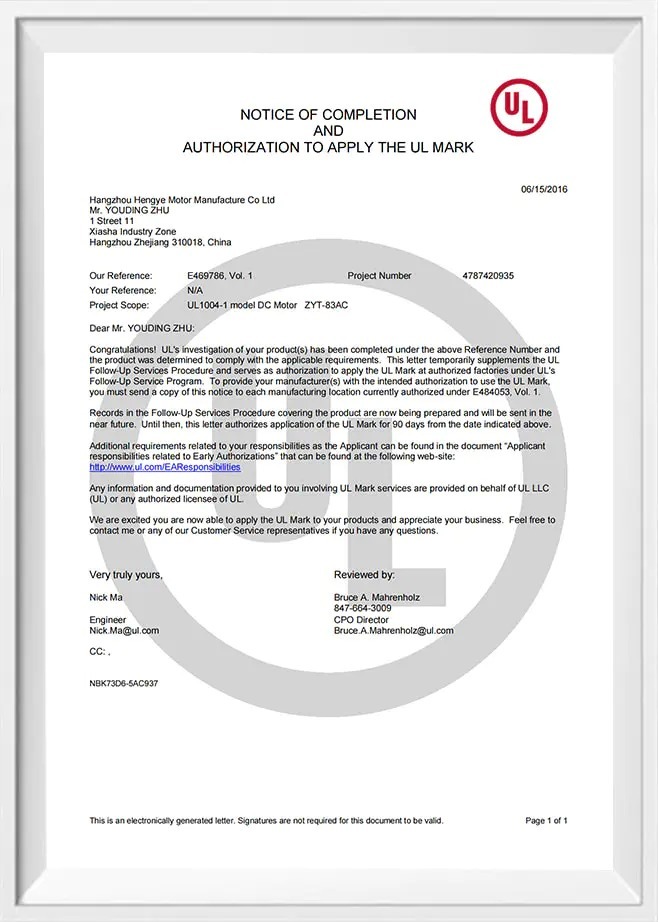
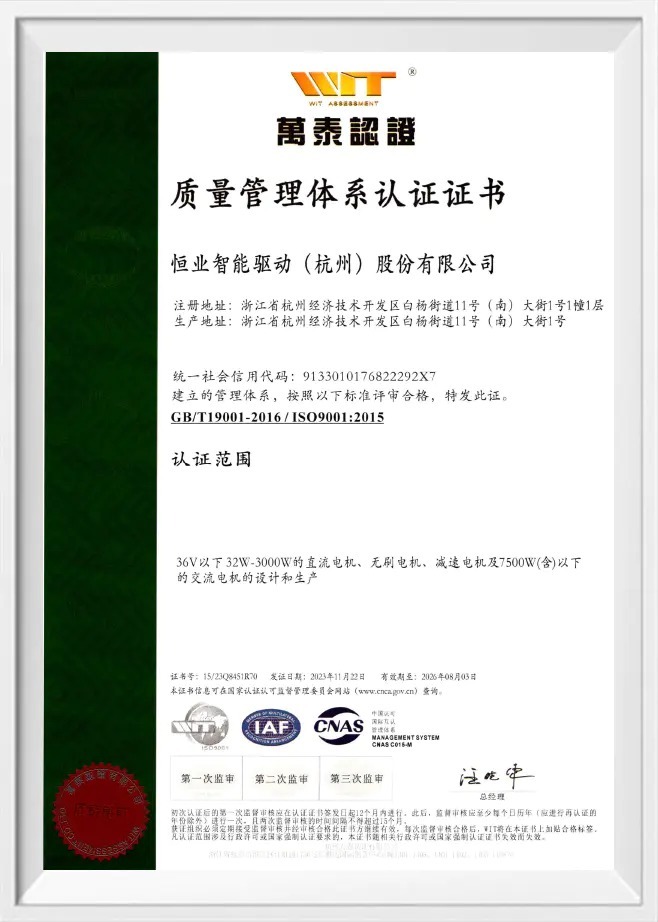
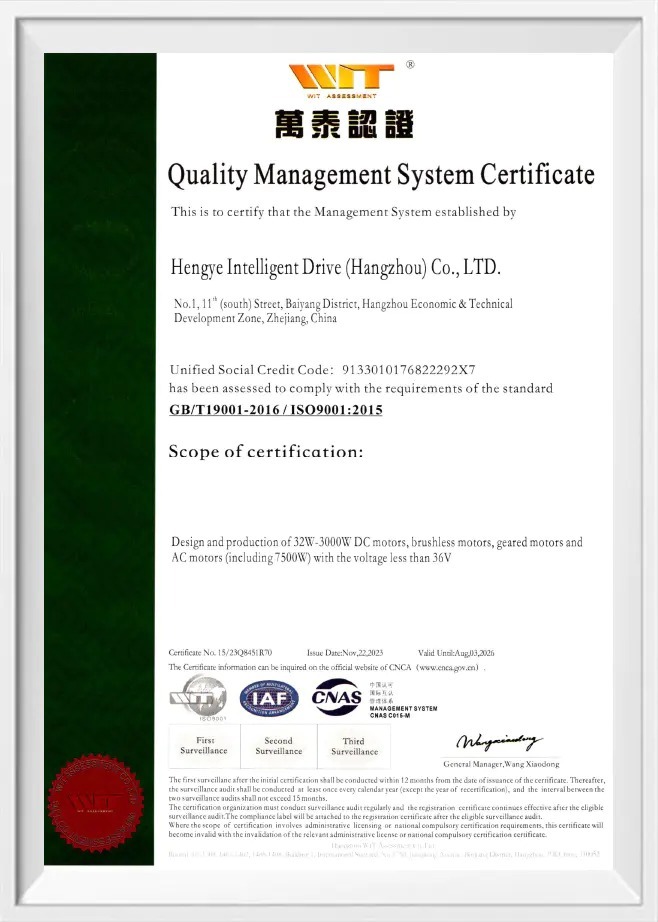
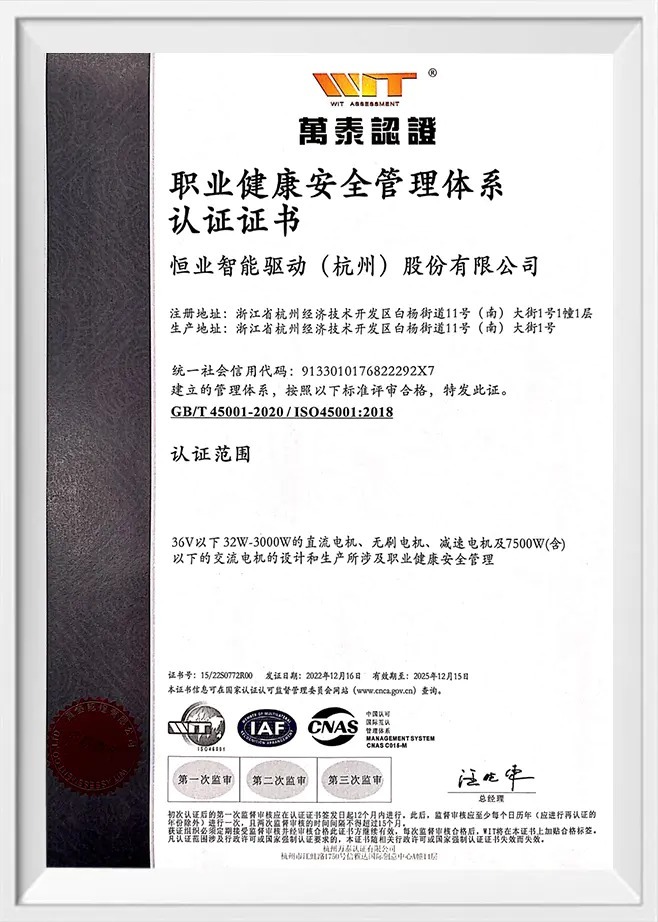
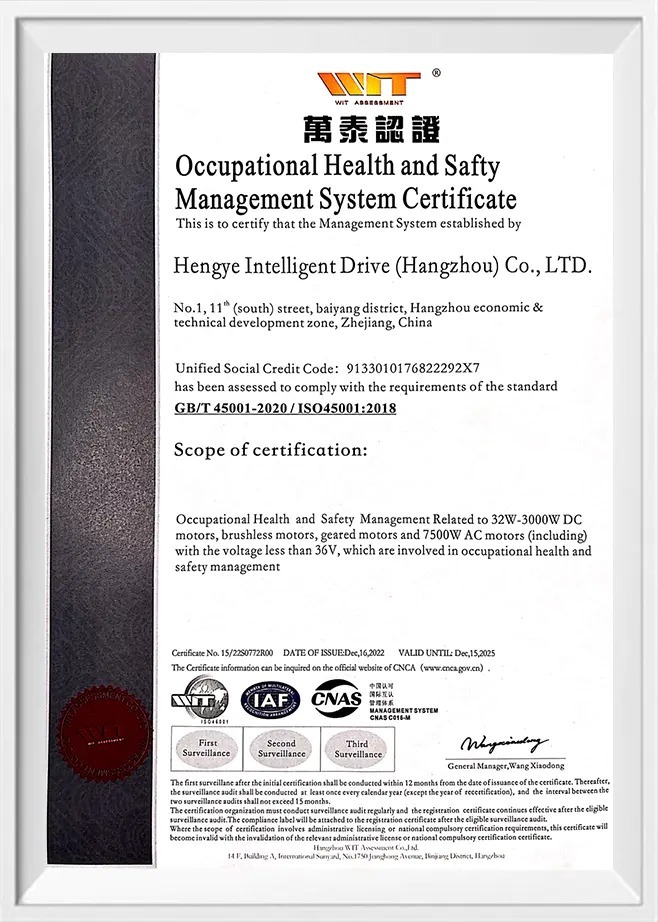
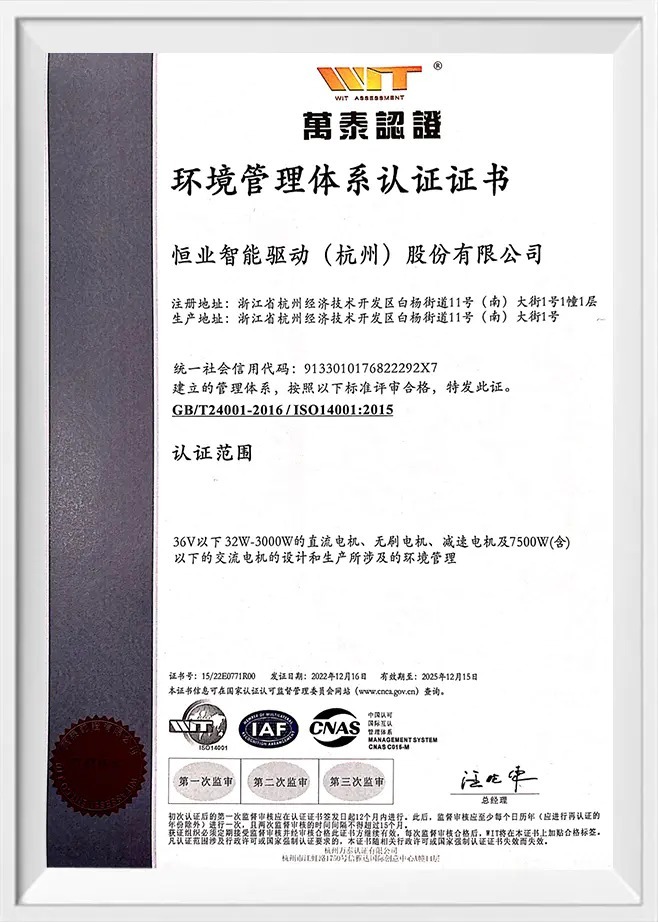
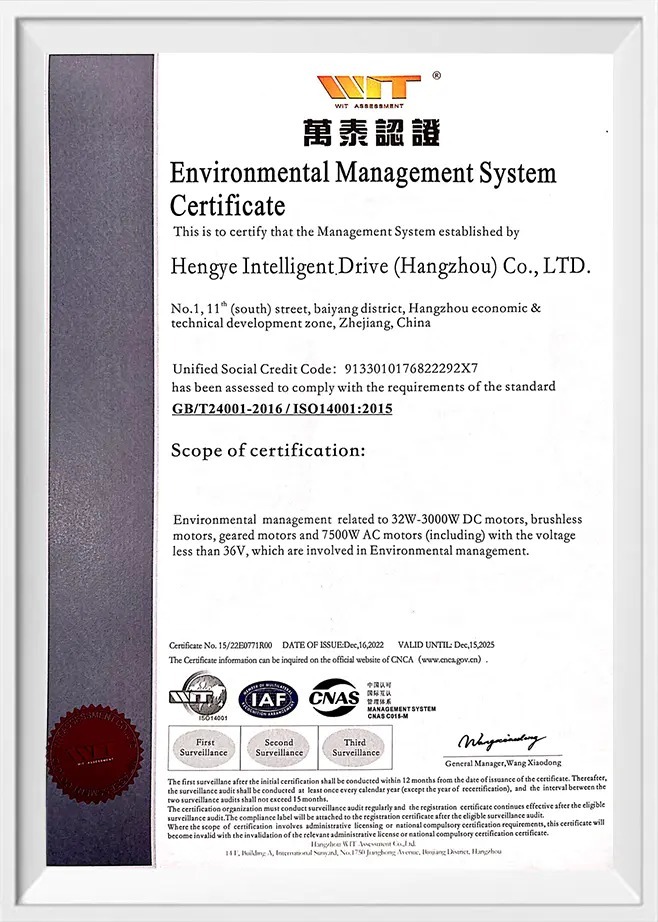
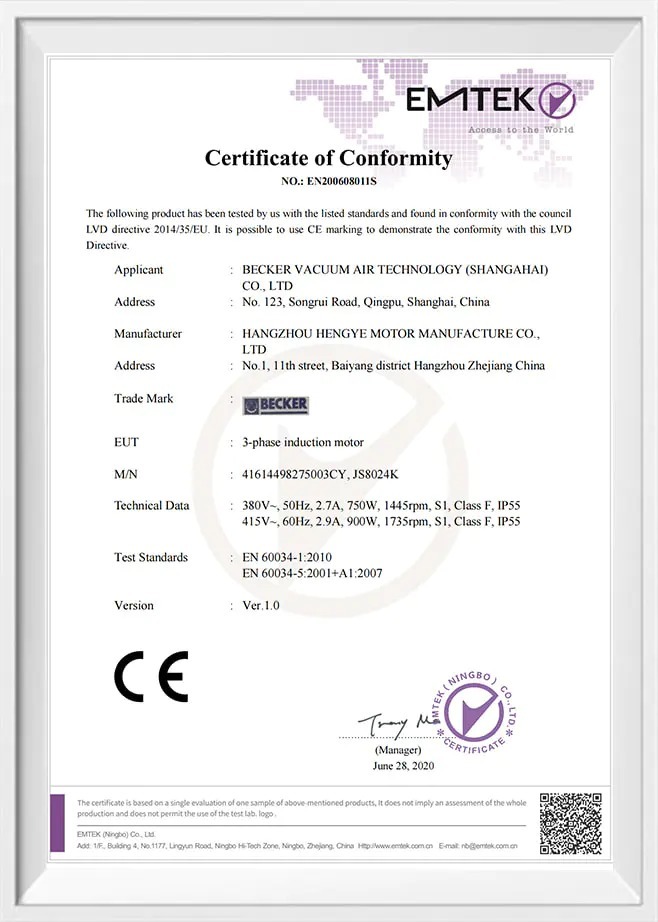
Certificado de honor

Noticias

En definitiva, si está controlando la velocidad de un motor de corriente continua
Por qué los sistemas de puertas necesitan un motorreductor BLDC en lugar de uno con escobillas
Los motores de inducción monofásicos se encuentran entre los motores eléctricos más utilizados en

Conocimientos sobre la industria de los motores reductores de corriente alterna

¿Cómo limita el arrancador suave de un motor de CA con reductor la corriente de irrupción que se produce cuando el motor de CA se pone en marcha a plena tensión?
El arrancador suave de un motor de CA con reductor limita la corriente de irrupción que ocurre al iniciar el motor a plena tensión mediante un aumento gradual de la tensión suministrada al motor. Los arrancadores suaves emplean controladores electrónicos y dispositivos semiconductores, como tiristores o transistores de efecto de campo, para ajustar las formas de onda de tensión y corriente y lograr un arranque suave. A continuación se explica el principio de funcionamiento del arrancador suave para limitar la corriente de irrupción provocada por el arranque a plena tensión del motor de CA:
    – Soft starters limit the starting current of the motor by controlling the rate at which the voltage ramps up. During the starting process, the soft starter gradually increases the output voltage to slowly accelerate the motor to the rated speed. The smooth ramp-up of voltage can effectively reduce the current impact during startup, reduce the voltage drop of the power grid, and reduce the stress on mechanical equipment and electrical components.
    – The soft starter allows the user to adjust the starting time of the motor, which is the time it takes for the motor to reach the rated speed from a stopped state. Extending the start-up time can further reduce the current peak at start-up and ensure a smooth acceleration process, thus reducing the shock to the mechanical and electrical system.
    – Soft starters usually have a current limiting feature that limits the maximum current the motor can draw when starting. By setting a current limit value, the soft starter prevents motor overload and protects the electrical system from potential damage. Before the motor reaches rated speed, the soft starter dynamically adjusts the output voltage to keep the current within a safe range.
    – Soft starters usually have an adjustable soft-start curve that can be optimized according to the requirements of the specific application. The soft-start curve determines the changing patterns of voltage and current to achieve optimal starting performance and system stability. Users can adjust the soft-start curve according to the motor’s load characteristics and working environment to minimize the shock and pressure during startup.

    – In some cases, the soft starter can be equipped with an inverter control function, allowing the user to control the output voltage and frequency in a modulated manner. By adjusting the operating mode and parameters of the inverter, more precise motor control can be achieved and the current and voltage waveforms during startup can be further optimized.

¿Cómo limita el arrancador suave de un motor de reducción de CA la corriente de arranque del motor mediante el control de la rampa de tensión?
The soft starter of an AC Geared motor limits the starting current by controlling the ramp rate of the voltage. Here’s how it works:
   – When the AC reduction motor is started, the soft starter gradually increases the voltage supplied to the motor over a predetermined ramp-up time. Instead of instantly applying full voltage to the motor, the soft starter ramps up the voltage gradually.
   – By gradually increasing the voltage, the soft starter limits the rate at which the motor accelerates and thus reduces the starting current drawn by the motor. The starting current is directly proportional to the rate of change of voltage (dv/dt). Therefore, by controlling the dv/dt, the soft starter effectively limits the starting current.
   – The gradual voltage ramp-up reduces the inrush current that occurs when the motor is started at full voltage. Inrush current is the high current surge that flows into the motor windings during startup. By limiting the rate of change of voltage, the soft starter mitigates this inrush current, preventing voltage sags, voltage fluctuations, and potential damage to the motor windings and electrical system.
   – The controlled ramp rate of voltage provided by the soft starter protects the motor and connected equipment from mechanical stress and electrical damage during startup. It prevents sudden shocks and torque spikes that can occur with full voltage starting, ensuring a smooth and controlled startup process.
   – Soft starters typically allow users to customize the ramp-up time according to the specific requirements of the motor and application. Longer ramp-up times result in gentler acceleration and further reduction in starting current, while shorter ramp-up times provide quicker startup.
   – By limiting the starting current and providing a smooth startup, the soft starter helps optimize the performance of the AC reduction motor. It reduces wear and tear on motor windings, bearings, gears, and other mechanical components, extending the lifespan of the motor.
es_ESSpanish